How to Identify Authentic Hawaiian Sea Salt
How to Identify Authentic Hawaiian Sea Salt





A Consumer Guide to Real Hawaiian Salt and How to Avoid Imitations
Not all “Hawaiian sea salt” is actually from Hawaiʻi. In fact, the majority of products labeled as Hawaiian salt are imported salts repackaged elsewhere, often using Hawaiian imagery, vague language, or misleading terms like “Hawaiian-style.” For consumers who care about quality, origin, and integrity, this creates real confusion. Whether you buy Hawaiian salt for yourself or as a gift, you want to make sure you are not mislead into buying something fake.
Making salt is hard work and authentic Hawaiian sea salt is rare, place-based, and deeply connected to Hawaiʻi’s land, ocean, and culture.
What Is Authentic Hawaiian Sea Salt?
Authentic Hawaiian sea salt, traditionally known as paʻakai, is salt that is:
Historically, paʻakai was essential in Hawaiian life and is deeply connected cutlurally. It was used not only for seasoning food, but also for preservation, healing practices, ceremonies, and trade. Salt gathering areas were carefully managed, and production followed generations of environmental knowledge.
Today, authentic Hawaiian salt continues this tradition, blending cultural respect, natural processes, ocean stewardship and modern food-safety standards.
Why Authentic Hawaiian Sea Salt Is So Rare
Despite how common it appears on store shelves and online, very little salt is actually produced in Hawaiʻi. Only two commercial producers harvest salt directly from Hawaiian waters, our own Kona Salt Farm and Hawaii Kai on the island of Molokai. This is because true Hawaiian salt production is:
As a result, most “Hawaiian” salts on the market are not harvested in Hawaiʻi at all they are imported salts marketed with Hawaiian branding.
How to Identify Real Hawaiian Sea Salt (Key Indicators)
If you want to be sure you’re buying authentic Hawaiian sea salt, look for the following markers.
1. Clear Harvest Origin — Not Just “Packed in Hawaiʻi”
Authentic producers clearly state where the salt is harvested, not just where it
is packaged. Be cautious of labels that say “Packed in Hawaiʻi” or “Hawaiian-style”. These phrases often indicate the salt itself was sourced elsewhere.
What to look for instead: Specific references to the actual water source and location of the salt farms.
2. Transparency About the Production Process
Real Hawaiian salt producers openly share:
If a brand avoids explaining how their salt is made, that’s often a red flag.
3. FDA-Registered Harvest Facilities
Hawaiian salt produced for culinary has to be harvested in FDA-registered facilities
and follow modern food safety standards. This ensures the salt is not only authentic, but also safe, traceable, and professionally produced. When in doubt, ask for the street address and the FDA Registration number of the harvesting site, not the facility where it is packaged.
4. Natural Variation in Crystal Size and Color
In Hawaii we are blessed with lots of sunshine and our salt is naturally solar evaporated. Our crystals vary in size and can differ from batch to batch. Highly uniform salt often indicates industrial processing.
5. Realistic Pricing
Authentic Hawaiian sea salt cannot be produced at the same cost as mass-market imported salt.
If the price seems unusually low, the salt likely was not harvested in Hawaii but
imported and repackaged and uses Hawaiian branding without Hawaiian sourcing. Many of the online brands never actually even saw Hawaii.
The Difference Between “Hawaiian-Style” and Hawaiian Salt
“Hawaiian-style” salt is not the same as Hawaiian sea salt. In Hawaii we are blessed with abundant sunshine and pure waters.
Hawaiian-style products are typically:
Even “Made in Hawaii” Can Be Misleading
Under current regulations, a product may legally claim “Made in Hawaii” if 51%
of its value such as packaging or labor occurs locally. Foreign salt can therefore be imported, repackaged, and labeled as “Made in Hawaii” without ever being harvested there.
Understanding this distinction helps protect both consumers and genuine Hawaiian producers.
Why Chefs use Hawaiian Salt
Our local chefs put a lot of thought into sourcing, they are deeply connected to
where their ingredients come from, the people who make them and very
purposefully support local farms.
Sustainability and Stewardship Matter
Salt Makers are deeply connected to the ocean that sustains us. Sea Salts of Hawaii gives 1% of all revenue to marine debris clean up at the Papahanaumokuakea Marine Sanctuary in the Northwestern Hawaiian Islands and support Coral Reef Restoration on Hawaii Island.
When imported salt is marketed as “Hawaiian,” it not only misleads consumers but also undermines centuries of cultural practice and the livelihoods of the few remaining salt makers who continue this labor-intensive work.
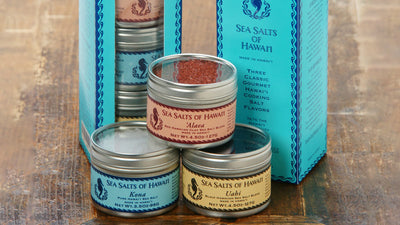
Send a special gift of Hawaiian flavor with our perfectly crafted salt sets.
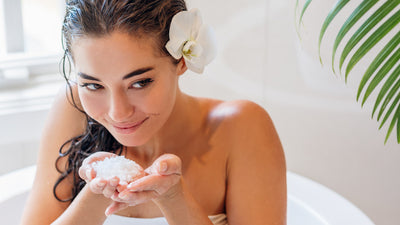
Bring the healing and therapeutic benefits of Hawaii's ocean to your bathtub with soaking bath salts.
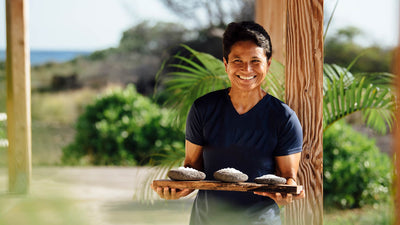
Take a tour of our oceanfront salt farm featured on Guy Fieri's newest series "Guy: Hawaiian Style" and learn about how our salt is made and hand harvested.
Sign-up to receive special offers and exciting updates.


